

Understanding Recovery and Disposal Codes in Waste Management
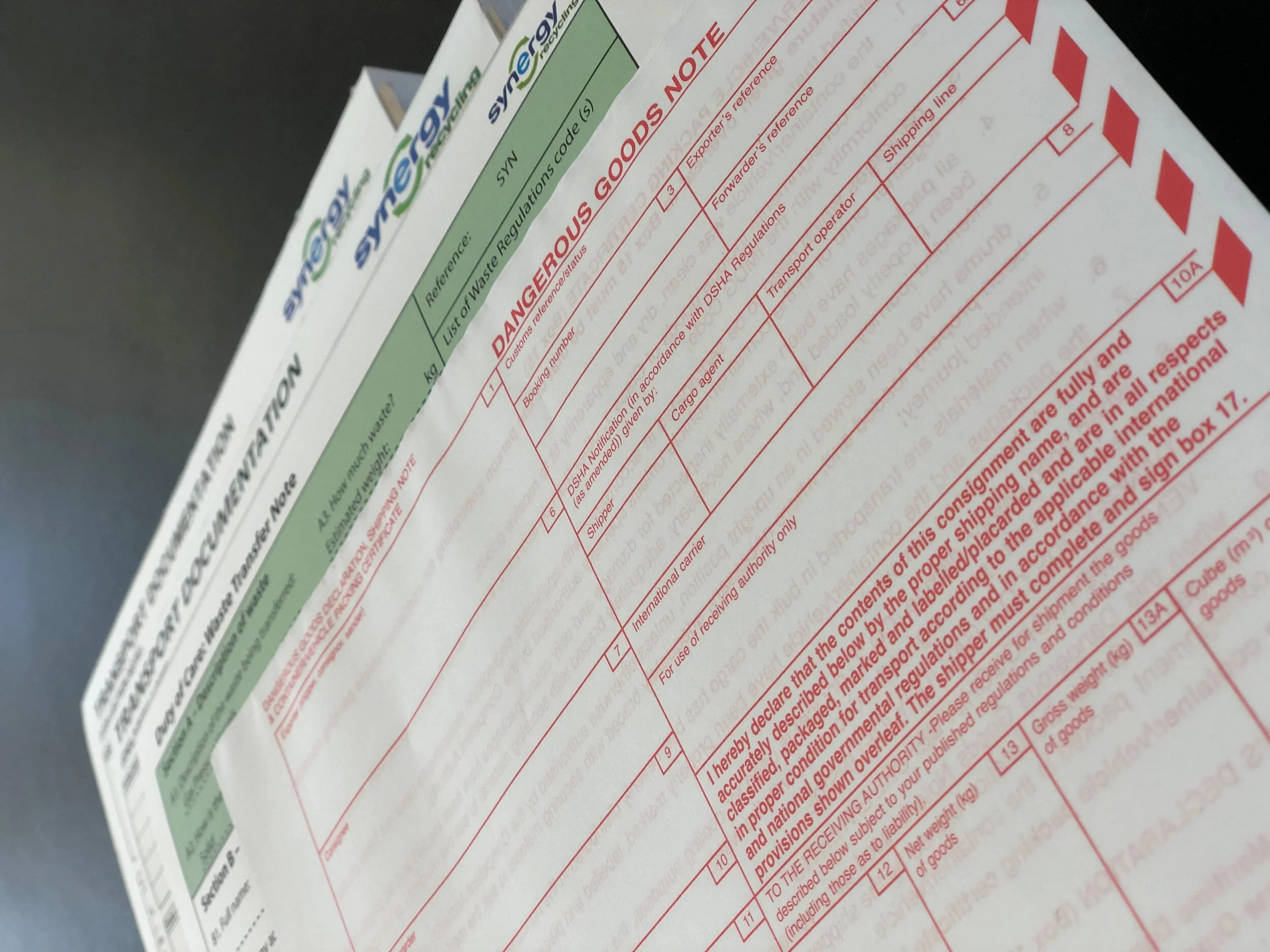
Every waste activity falls into one of two categories. Recovery or disposal. The definitions come from the EU Waste Framework Directive 2008/98. The UK still applies these definitions. You must use these codes on Consignment Notes. You must also use them for Operator Returns.
Recovery and Disposal Codes in Waste
Every waste activity falls into one of two categories. Recovery or disposal. The definitions come from the EU Waste Framework Directive 2008/98. The UK still applies these definitions. You must use these codes on Consignment Notes. You must also use them for Operator Returns.
Why these codes matter
The Environment Agency checks these codes during audits. Incorrect codes cause compliance failures. They also affect permits, reporting, and enforcement decisions. You need to apply the correct code based on what actually happens to the waste.
The Environment Agency flowchart
For Operator Returns, the Environment Agency provides a flowchart. It breaks recovery and disposal codes down to Level 3. It explains each operation in plain terms. Regulators expect you to follow this logic when selecting a code.
Recovery operations explained
Recovery means the waste replaces materials, energy, or resources. It does not mean disposal.
R1* Use principally as a fuel or to generate energy. Example. Incineration with energy recovery.
R2 Solvent reclamation or regeneration. Example. Distillation of used solvents.
R3 Recycling or reclamation of organic substances not used as solvents. This includes composting and biological treatment.
R4 Recycling or reclamation of metals and metal compounds. Example. Scrap metal processing.
R5 Recycling or reclamation of other inorganic materials. Example. Glass or mineral recovery.
R6 Regeneration of acids or bases. Example. Acid recovery systems.
R7 Recovery of components used for pollution abatement. Example. Filter media recovery.
R8 Recovery of components from catalysts. Example. Precious metal recovery.
R9 Oil re-refining or other reuse of oil. Example. Used oil processing.
R10 Land treatment that benefits agriculture or ecology. Example. Soil improvement.
R11 Use of wastes from R1 to R10. Example. Secondary use of recovered outputs.
R12* Exchange of wastes for submission to R1 to R11. This is a preparatory step. It is not final recovery.
R13* Storage pending R1 to R12. This excludes storage at the place of production before collection. It is also not final recovery.
Disposal operations explained
Disposal means the waste is discarded. No useful recovery takes place.
D1. Deposit into or onto land. Example. Landfill.
D2. Land treatment. Example. Biodegradation of liquid wastes in soil.
D3. Deep injection. Example. Injection into wells or salt domes.
D4. Surface impoundment. Example. Ponds or lagoons.
D5. Specially engineered landfill. Example. Lined and capped cells.
D6. Release into inland water bodies.
D7. Release into seas or oceans.
D8. Biological treatment followed by disposal. Example. Treatment producing residues sent to landfill.
D9. Physico chemical treatment followed by disposal. Example. Drying or evaporation before landfill.
D10. Incineration on land without energy recovery.
D11. Incineration at sea.
D12. Permanent storage. Example. Mine storage.
D13. Blending or mixing before D1 to D12. This is not final disposal.
D14. Repackaging before D1 to D13.
D15. Storage pending D1 to D14. This excludes storage at the place of production before collection.
Key compliance point
R12, R13, D13, D14, and D15 are intermediate operations. Regulators will always ask what happens next. The final operation determines whether the activity is recovery or disposal.